
Local SEO for Small Businesses can play an important role in helping local companies become easier to find online. When people search for products or services near them, businesses with a strong local online presence have more opportunities to connect with potential customers.
Running a local business today is not only about having a good product or service. People increasingly use search engines to decide where to shop, eat, visit, or hire a service. A person looking for a nearby restaurant, salon, clinic, tuition centre, photographer, or marketing professional may search online before making a decision.
This creates a valuable opportunity for small businesses. With the right online strategy, a local business can become easier to discover when potential customers are actively looking for what it offers.
This article explains practical ways local businesses can improve their online visibility and attract more customers through search.
What Does Local Online Visibility Mean?
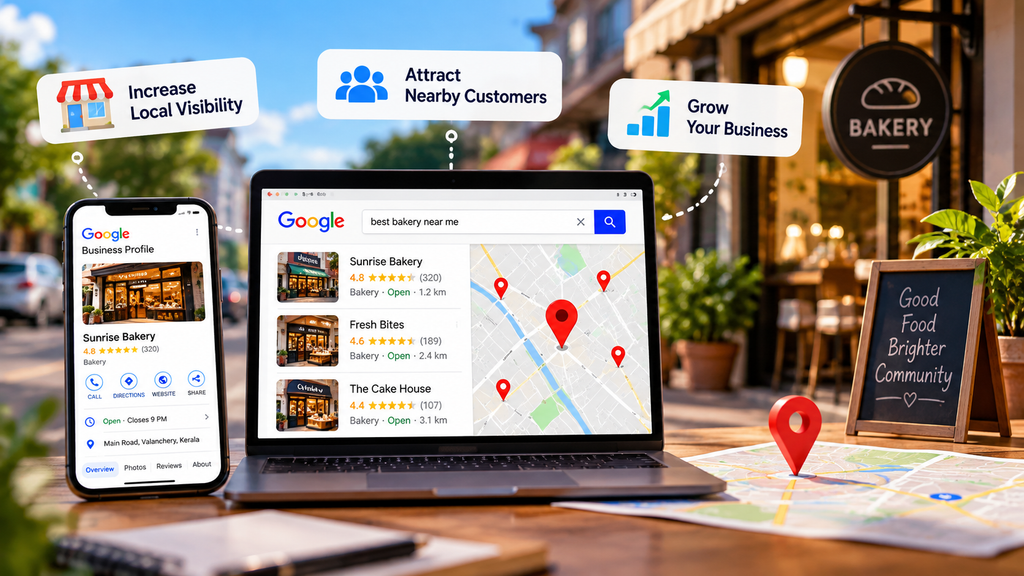
Local online visibility refers to how easily people can discover a business when they search for products or services within a particular area.
For example, imagine someone in Valanchery searching for a digital marketing service. They might type:
- Digital marketing service near me
- SEO expert in Valanchery
- Digital marketing services in Malappuram
The businesses that provide useful information, maintain accurate online profiles, and have a strong local presence have a better opportunity to be discovered.
The goal is not simply to get more website visitors. The real objective is to reach people who may actually become customers.
Local SEO for Small Businesses: Why It Matters
Large companies often have extensive advertising budgets and websites with strong online authority. A small business may not have the same resources.
However, local search gives smaller businesses an opportunity to focus on the customers around them.
A bakery does not need visitors from every part of the country. It needs people who are close enough to visit the shop.
Similarly, a local electrician, dentist, photographer, or fitness centre mainly wants enquiries from people within its service area.
This makes local search particularly useful for location-based businesses.
Create and Maintain a Google Business Profile
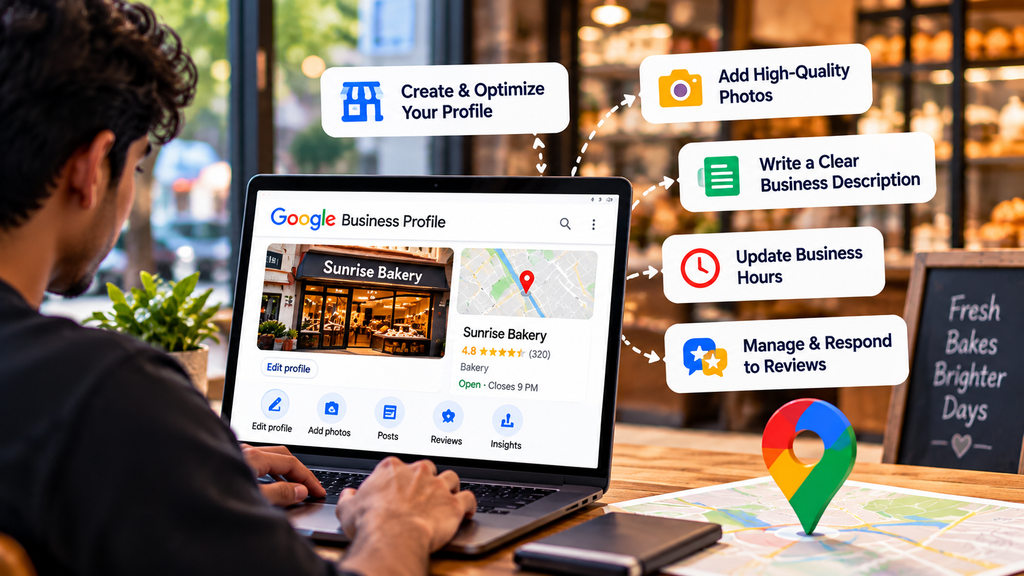
One of the first things a local business should pay attention to is its Google Business Profile.
This profile can show important business information when people search for the company on Google or look for businesses through Google Maps.
Depending on the business, the profile can display information such as:
- Business name
- Category
- Address
- Phone number
- Website
- Opening hours
- Photos
- Services
- Customer reviews
Business owners should regularly check this information and correct anything that becomes outdated.
For example, if a business changes its phone number but leaves the old number online, potential customers may have difficulty contacting it.
Make Your Website Useful for Local Customers
A business website should answer the questions that potential customers are likely to have.
Instead of creating a website only to display a company name and a few pictures, businesses can provide useful information about:
- Services
- Pricing information where appropriate
- Service locations
- Contact details
- Business hours
- Frequently asked questions
- Customer experiences
- Booking or enquiry options
Suppose a company serves several nearby areas. A visitor should be able to understand clearly where the company operates.
Clear information makes the website more useful and can also help search engines understand the business.
Use Location Information Naturally
Location-related words can help communicate where a business operates.
For example, a business serving customers in Valanchery could naturally mention Valanchery in relevant sections of its website.
However, repeating the same location keyword many times can make the content difficult to read.
Instead of writing:
“Best SEO service in Valanchery. SEO service Valanchery. Valanchery SEO expert. Best SEO expert Valanchery.”
a better approach is to write naturally:
“We provide SEO and digital marketing services for businesses looking to improve their online presence in Valanchery and nearby areas.”
The second version communicates the location without making the content sound unnatural.
Encourage Genuine Customer Feedback
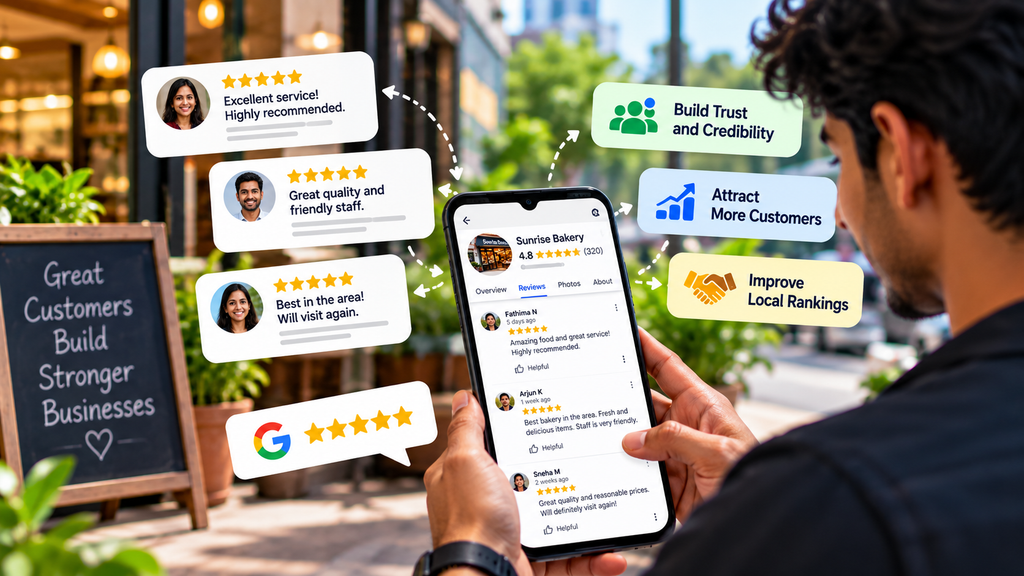
When people discover an unfamiliar local business, they often want some evidence that others have used the service.
Customer reviews can provide that additional information.
Businesses can politely ask genuine customers to share their experiences after completing a service or purchase.
A good review strategy should focus on authenticity. Businesses should not create fake reviews or ask people to post experiences they did not have.
It is also useful to respond professionally to reviews. Thanking customers for positive feedback and responding respectfully to concerns can demonstrate that the business pays attention to its customers.
Keep Business Information Consistent
Imagine that a company has one phone number on its website, another number on a business directory, and a different address on a social media page.
This can create confusion.
Try to keep important business details consistent wherever the business is listed online.
The basic information includes:
Business Name
Address
Phone Number
Other details, such as website links and opening hours, should also be kept up to date whenever possible.
Create Content That Answers Local Customers’ Questions
Blogging can support a local business when the content is genuinely useful.
Instead of publishing articles only to insert keywords, think about the questions customers ask before contacting the business.
For example, a fitness centre could publish:
“How to Choose a Fitness Centre for Your Workout Goals”
A digital marketing professional could write:
“How Small Businesses Can Generate Leads Online”
A photography studio could publish:
“What to Prepare Before a Professional Photoshoot”
Such content can introduce the business to people who are researching a problem before they are ready to make a purchase.
Make the Website Easy to Use on Mobile
A large number of local searches are performed using smartphones.
Someone may discover a business while travelling, walking through a town, or looking for a service nearby.
If the website is difficult to use on a phone, the visitor may leave before contacting the business.
A mobile-friendly website should have:
- Easy-to-read text
- Simple navigation
- Properly sized images
- Fast-loading pages
- Clearly visible contact information
- Buttons that are easy to tap
The visitor should not have to zoom in repeatedly just to find a phone number or service.
Add Clear Contact Options
Getting someone to visit your website is only one part of digital marketing.
The next step is helping that visitor contact the business.
Depending on the business, useful contact options may include:
- Phone call
- Contact form
- Appointment booking
- Store location
A clear call-to-action can make the next step easier.
For example:
“Contact us to discuss your project.”
or
“Call us to book an appointment.”
The appropriate call-to-action depends on the type of business.
Use Photos to Show the Real Business
Good-quality images can make a local business profile more informative.
Restaurants can show their food and dining area.
Salons can display their interior and completed work.
Fitness centres can show their facilities.
Service businesses can show their team, equipment, completed projects, or workplace.
Real and relevant photographs can help potential customers understand what they can expect before visiting or contacting the business.
Build a Presence on Relevant Platforms
A business does not necessarily need to create an account on every social media platform.
It is more useful to identify where its potential customers spend time and maintain those profiles properly.
Depending on the business, this could include:
- YouTube
- Industry directories
- Local business platforms
The important thing is to keep the information accurate and provide useful content instead of creating profiles that are rarely updated.
Think About Search Intent
Not everyone searching online has the same purpose.
Consider these three searches:
“What is SEO?”
The person may simply be learning.
“SEO services for small businesses”
The person may be researching possible solutions.
“SEO agency near me”
The person may be looking for a business to contact.
Understanding this difference can help businesses create the right type of content.
Educational articles can attract people in the research stage, while service pages can help people who are closer to making a decision.
Measure What Is Working
Digital marketing should not be based entirely on guesswork.
Businesses can monitor different types of information to understand how their online presence is performing.
Useful measurements can include:
- Website visitors
- Search impressions
- Search clicks
- Phone enquiries
- Form submissions
- Website conversions
- Google Business Profile interactions
- Direction requests
- Customer reviews
The exact metrics that matter will depend on the business and its goals.
For example, a local restaurant may care about calls, directions, bookings, and visits, while a B2B service provider may focus more on website enquiries and lead forms.
Common Mistakes Local Businesses Should Avoid
Some businesses spend time creating an online presence but overlook basic details.
Common problems include:
- Outdated contact information
- An incomplete Google Business Profile
- Poor-quality website content
- Slow or difficult-to-use websites
- Fake customer reviews
- Repeated keyword stuffing
- Inactive social media profiles
- Missing location information
- No clear way to contact the business
- Ignoring customer questions and reviews
Fixing these basic issues can create a stronger foundation for future digital marketing activities.
A Simple Local Search Strategy
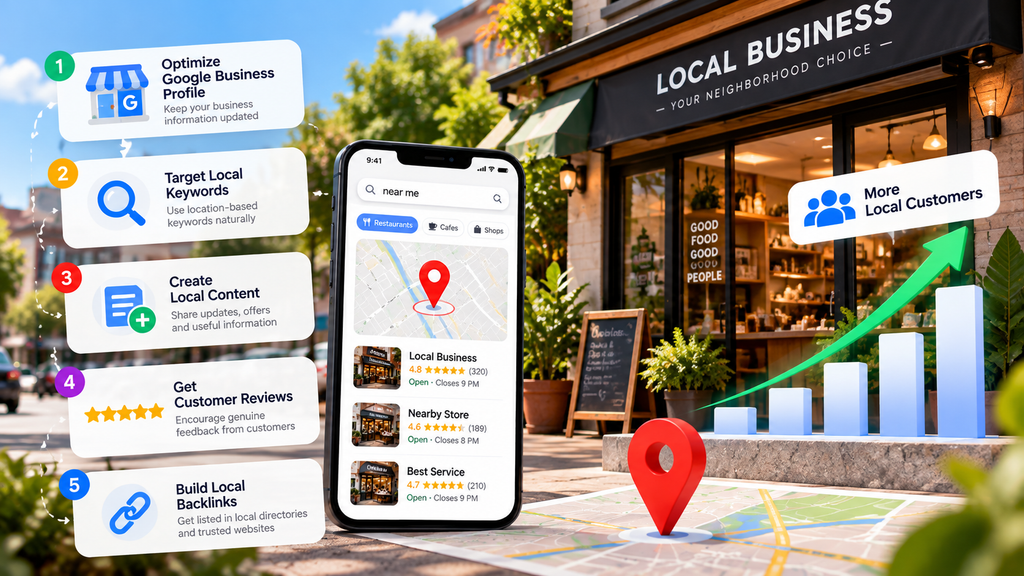
A small business can begin with a simple process:
Step 1: Create and verify the Google Business Profile.
Step 2: Check the business name, address, phone number, website, category, and working hours.
Step 3: Build a simple, mobile-friendly website.
Step 4: Create separate pages for important services.
Step 5: Clearly mention the areas the business serves.
Step 6: Encourage genuine customers to leave honest reviews.
Step 7: Publish useful content that answers customer questions.
Step 8: Maintain relevant social media and business listings.
Step 9: Monitor website and local search performance.
Step 10: Improve the strategy based on actual results.
Final Thoughts
Getting customers through online search is not about adding as many keywords as possible or publishing content every day.
It starts with providing accurate information, understanding what potential customers are searching for, and making it easy for them to discover and contact the business.
A complete local online presence can include a well-maintained Google Business Profile, a useful website, genuine customer reviews, relevant content, accurate business information, and a consistent digital presence.
For a small business, these activities can create a strong foundation for attracting people who are already searching for the products or services it provides.
The most important approach is to focus on helping customers first and optimizing for search second.