
Introduction
Digital Marketing vs Traditional Marketing is a common comparison for businesses looking to choose the most effective way to reach their target audience. Digital Marketing vs Traditional Marketing is one of the most discussed topics in modern business. Regardless of how innovative a product or service may be, people need to be aware of it before they can consider making a purchase. Over time, marketing methods have changed dramatically. In the past, companies mainly depended on newspapers, magazines, radio broadcasts, television commercials, and outdoor advertising to promote their offerings. Today, the widespread use of the internet has introduced new ways for businesses to communicate with consumers through digital platforms.
What is Traditional Marketing?
Traditional marketing refers to promotional activities that use offline media and conventional communication channels to reach consumers. These methods have been used for many years and continue to be effective for certain industries and audiences.
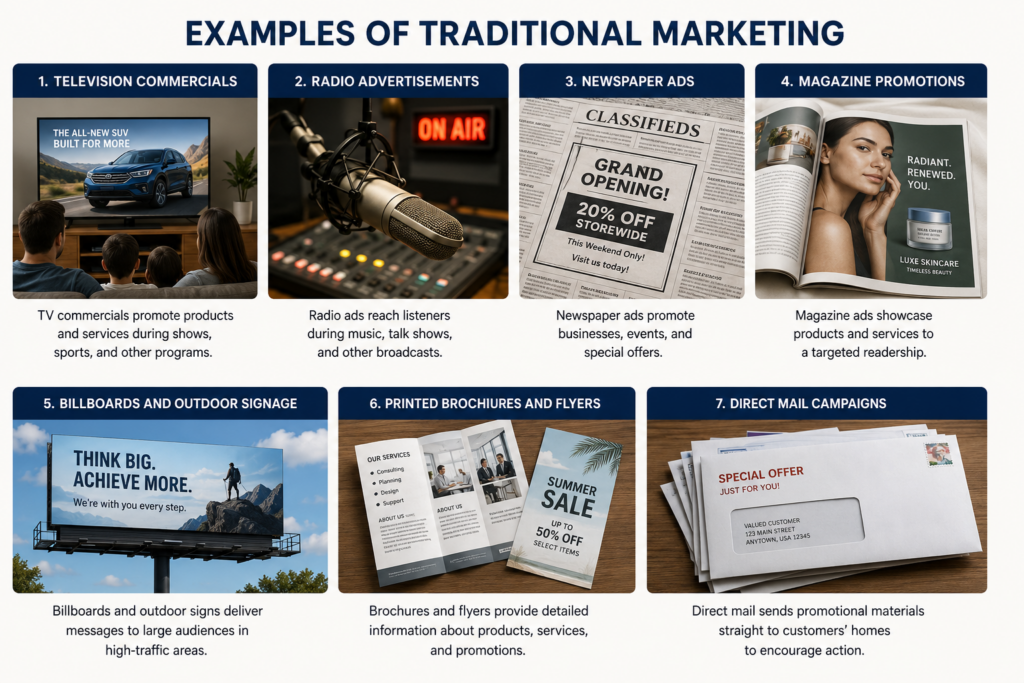
Examples of traditional marketing include:
- Television commercials
- Radio advertisements
- Newspaper ads
- Magazine promotions
- Billboards and outdoor signage
- Printed brochures and flyers
- Direct mail campaigns
Traditional marketing is designed to reach large groups of people through physical or broadcast media. It is often beneficial for businesses targeting local communities or audiences that regularly consume offline media.
What is Digital Marketing?
Digital marketing involves promoting products, services, or brands through internet-based channels and digital technologies. It allows businesses to engage with consumers online and build relationships through various digital platforms.
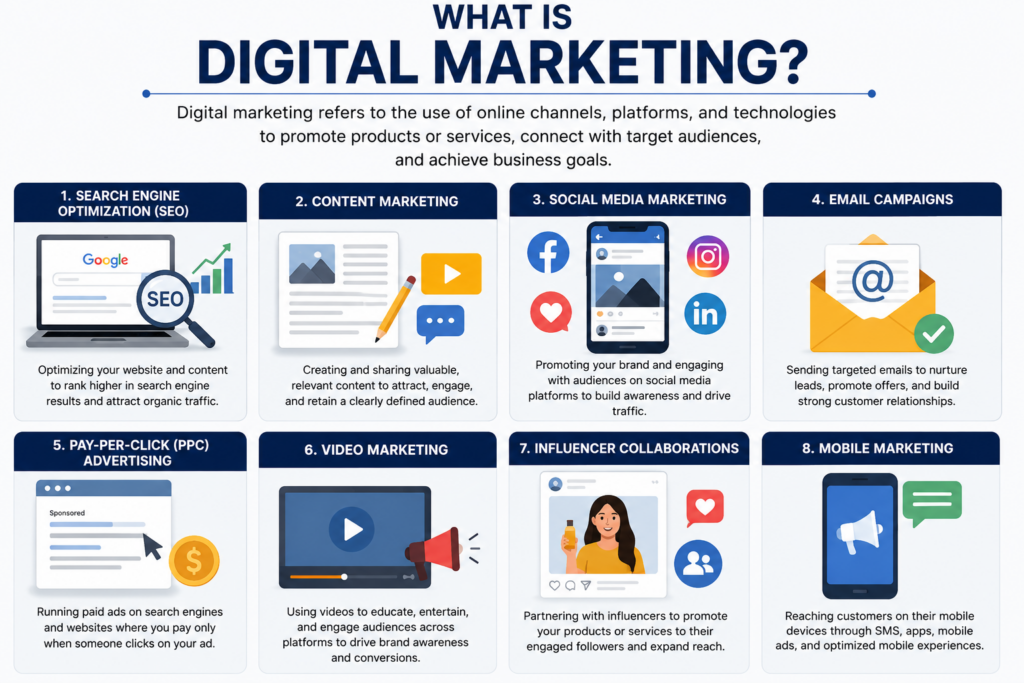
Popular forms of digital marketing include:
- Search Engine Optimization (SEO)
- Content Marketing
- Social Media Marketing
- Email Campaigns
- Pay-Per-Click (PPC) Advertising
- Video Marketing
- Influencer Collaborations
- Mobile Marketing
Digital marketing provides businesses with the ability to reach users across different regions while monitoring campaign performance through detailed analytics. To learn more about SEO best practices, visit Google Search Central.
1. Audience Reach and Targeting
One of the most noticeable differences between traditional and digital marketing is how audiences are reached. When comparing Digital Marketing vs Traditional Marketing, audience targeting is a major difference.
Traditional marketing generally focuses on broad exposure. For instance, a television advertisement may be seen by a large number of viewers, but only a portion of them may actually be interested in the product being advertised.
Digital marketing offers advanced targeting capabilities. Businesses can define their audience based on factors such as:
- Age group
- Gender
- Geographic location
- Interests and hobbies
- Online activities
- Previous purchases
This targeted approach helps companies deliver relevant content to people who are more likely to become customers.
2. Cost and Budget Requirements
Budget considerations often influence marketing decisions. Another important aspect of Digital Marketing vs Traditional Marketing is cost efficiency.
Traditional marketing methods can be expensive. Running television commercials, purchasing billboard space, or placing advertisements in major newspapers may require a substantial investment.
Digital marketing is generally more budget-friendly. Businesses can start with smaller campaigns and increase spending as they achieve positive results.
Some examples include:
- Running affordable social media advertisements
- Sending promotional emails to subscribers
- Generating organic traffic through SEO efforts
Because of its scalability, digital marketing is often preferred by startups and small businesses.
3. Performance Tracking and Measurement
Evaluating campaign success is essential for improving marketing outcomes.
Traditional marketing offers limited tracking options. While businesses may know how many people watch a television channel or read a newspaper, determining the exact impact of an advertisement can be challenging. Digital Marketing vs Traditional Marketing differs significantly in performance measurement.
Digital marketing provides detailed performance data. Marketers can track:
- Website visits
- Click-through rates
- Conversion rates
- Social media interactions
- Email engagement
- Customer journeys
These metrics allow businesses to understand what is working and make informed adjustments to their campaigns.
4. Customer Engagement
Traditional marketing primarily functions as one-way communication. Businesses share messages with consumers, but immediate interaction is usually limited.
For example, someone watching a television advertisement cannot instantly communicate with the advertiser.
Digital marketing encourages direct engagement. Customers can:
- Comment on posts
- Send messages
- Participate in surveys
- Leave reviews
- Share content with others
This interactive environment helps businesses build trust and strengthen customer relationships.
5. Speed of Implementation
Launching a traditional marketing campaign often requires considerable preparation. Designing, printing, and distributing promotional materials can take significant time.
Digital marketing campaigns can be created and launched much more quickly. Businesses can publish content, run advertisements, or send email campaigns within a short period.
Another advantage is that digital campaigns can be modified instantly if improvements or corrections are needed.
6. Geographic Reach
Traditional marketing is often restricted to specific locations. For example, a local newspaper advertisement mainly reaches readers within a particular area.
Digital marketing removes many geographic limitations. A website, social media page, or online advertisement can be accessed by users from different cities, countries, or continents.
This broader reach allows businesses to expand into new markets and attract customers worldwide.
7. Personalization Capabilities
Consumers increasingly expect personalized experiences from brands.
Traditional marketing usually delivers the same message to everyone. A billboard or magazine advertisement cannot change based on individual preferences.
Digital marketing enables businesses to customize content according to user behavior and interests.
Examples include:
- Personalized email offers
- Product recommendations
- Customized advertisements
- Tailored website experiences
Personalized communication often improves customer satisfaction and increases conversion rates.
8. Long-Term Benefits
Both marketing approaches can contribute to long-term business growth, but they achieve this in different ways.
Traditional marketing can strengthen brand recognition through repeated exposure across television, radio, and outdoor advertising channels.
Digital marketing can generate lasting results through strategies such as SEO and content creation. A high-quality article or optimized webpage may continue attracting visitors long after it has been published.
This ongoing visibility can provide consistent value over time.
9. Flexibility and Campaign Optimization
Making changes to traditional marketing campaigns can be difficult and costly once they are published or broadcast.
Digital marketing offers greater flexibility. Businesses can:
- Update advertisements instantly
- Modify audience targeting
- Increase or decrease budgets
- Test multiple versions of content
- Pause campaigns when necessary
This adaptability allows marketers to improve performance continuously and maximize their return on investment.
Which Marketing Strategy Should You Choose?
The ideal marketing approach depends on several factors, including business goals, target audience, industry, and available budget. Understanding Digital Marketing vs Traditional Marketing helps businesses select the right strategy.
Traditional marketing may be suitable for:
- Building local awareness
- Reaching older audiences
- Large-scale branding campaigns
- Offline customer engagement
Digital marketing may be more effective for:
- Small and medium-sized businesses
- Online stores
- Lead generation efforts
- Data-driven marketing campaigns
- Businesses seeking measurable results
Many organizations achieve the best outcomes by combining both traditional and digital marketing techniques into a unified strategy. Businesses can also explore resources from Google Search Central and HubSpot Marketing Blog to improve their digital marketing knowledge.
Conclusion
Understanding Digital Marketing vs Traditional Marketing helps businesses choose the right strategy. Traditional marketing and digital marketing are both valuable tools for promoting products and services. Traditional marketing relies on offline channels such as television, radio, newspapers, and printed materials to reach consumers. Digital marketing uses online platforms to connect with targeted audiences, monitor performance, and encourage customer interaction.
Compared with traditional methods, digital marketing offers advantages such as precise targeting, lower costs, real-time analytics, personalization, and greater flexibility. However, traditional marketing remains effective for building brand awareness and reaching specific demographic groups.
Ultimately, the most successful marketing strategy is one that aligns with the needs and preferences of the target audience. By understanding the strengths of both approaches, businesses can create effective campaigns that support long-term growth and customer engagement. In conclusion, Digital Marketing vs Traditional Marketing both offer unique advantages for business growth.