
Introduction
What is Digital Marketing? Digital marketing is the process of promoting products, services, or brands through online channels such as search engines, social media platforms, websites, email, and digital advertisements.
The digital age has changed how people communicate, gather information, shop, and interact with brands. Today, most consumers rely on search engines, social media networks, websites, and mobile apps to research products and services before making decisions.https://salahudheen.in/what-is-digital-marketing-a-beginners-guide/
What is Digital Marketing?
What is Digital Marketing? It is the process of promoting products and services online. Digital marketing is the practice of promoting products, services, or brands through internet-based channels and digital technologies. It involves connecting with audiences using platforms such as websites, search engines, social media networks, email, and mobile devices.
In contrast to traditional marketing methods like television commercials, newspaper advertisements, radio broadcasts, and billboards, digital marketing focuses on engaging consumers through online interactions.
The main objective is to attract interested users, provide valuable information, build relationships, and encourage actions such as purchases, inquiries, subscriptions, or registrations.
Why is Digital Marketing Important?
Digital marketing plays a significant role because consumer habits have evolved. Before making purchases, many people search online, compare alternatives, read customer reviews, and watch videos to gather information.
Businesses that establish a strong digital presence are more likely to attract new customers and maintain long-term relationships with existing ones. Understanding What is Digital Marketing helps businesses grow online.
Some major advantages of digital marketing include:
- Greater online exposure
- Improved customer interaction
- Affordable promotional opportunities
- Easy performance tracking
- Access to global audiences
- Stronger brand recognition
- Increased sales potential
These benefits allow businesses of all sizes to compete effectively in today’s marketplace.
How Does Digital Marketing Work?
Many beginners ask, What is Digital Marketing and how it works. Digital marketing uses multiple online channels to engage potential customers throughout the buying process.
A typical digital marketing strategy includes:
- Defining the target audience
- Producing useful and relevant content
- Sharing content through digital platforms
- Interacting with users
- Turning visitors into customers
- Monitoring results and optimizing campaigns
For instance, a company may publish an informative blog article that appears in search engine results. A visitor discovers the article, explores the website, subscribes to updates, and later becomes a customer. Digital marketing helps guide users through each stage of this process.
Major Types of Digital Marketing
1. Search Engine Optimization (SEO)
Search Engine Optimization, or SEO, focuses on improving a website’s ranking in search engine results pages.
When users search for information online, businesses aim to appear among the top results to increase visibility and traffic.
SEO typically includes:
- Keyword analysis
- Content enhancement
- Technical website optimization
- Link acquisition
- User experience improvements
A well-executed SEO strategy can generate consistent organic traffic without relying on paid advertisements.
2. Content Marketing
Content marketing involves creating and distributing valuable content that informs, educates, or entertains an audience.
Common content formats include:
- Blog articles
- Informative posts
- Videos
- Infographics
- E-books
- Tutorials
Rather than focusing solely on sales, content marketing aims to build trust and establish authority within a specific industry.
Quality content can attract visitors and nurture customer relationships over time.
3. Social Media Marketing
Social media marketing uses social networking platforms to promote brands and engage with audiences.
Popular platforms include:
- YouTube
- TikTok
- X
Businesses use these channels to share updates, publish content, communicate with followers, and strengthen brand awareness.
Active engagement on social media can improve customer loyalty and increase visibility.
4. Email Marketing
Email marketing remains one of the most reliable digital marketing techniques.
Companies communicate directly with subscribers through emails such as:
- Newsletters
- Product announcements
- Special promotions
- Educational resources
- Event invitations
Because email reaches users personally, it often delivers strong engagement and conversion rates when executed effectively.
5. Pay-Per-Click Advertising (PPC)
PPC advertising allows businesses to place ads on search engines and digital platforms.
Advertisers are charged only when users click on their ads.
Key benefits include:
- Instant visibility
- Audience targeting
- Quick traffic generation
- Flexible budget management
PPC campaigns are useful for driving immediate results and attracting potential customers.
6. Affiliate Marketing
Affiliate marketing is a performance-based strategy where partners promote products or services in exchange for commissions.
Affiliates earn rewards when their promotional efforts generate sales or leads.
This approach helps businesses expand their reach while controlling marketing costs.
7. Influencer Marketing
Influencer marketing involves working with individuals who have built loyal audiences online.
Influencers may promote products through:
- Social media content
- Video reviews
- Product demonstrations
- Tutorials
Since audiences often trust influencer recommendations, this strategy can improve credibility and increase brand awareness.
Benefits of Digital Marketing
Digital marketing provides several advantages compared to many traditional advertising methods.
Cost Efficiency
Online marketing campaigns can often be launched with lower budgets than television, radio, or print advertising.
Accurate Targeting
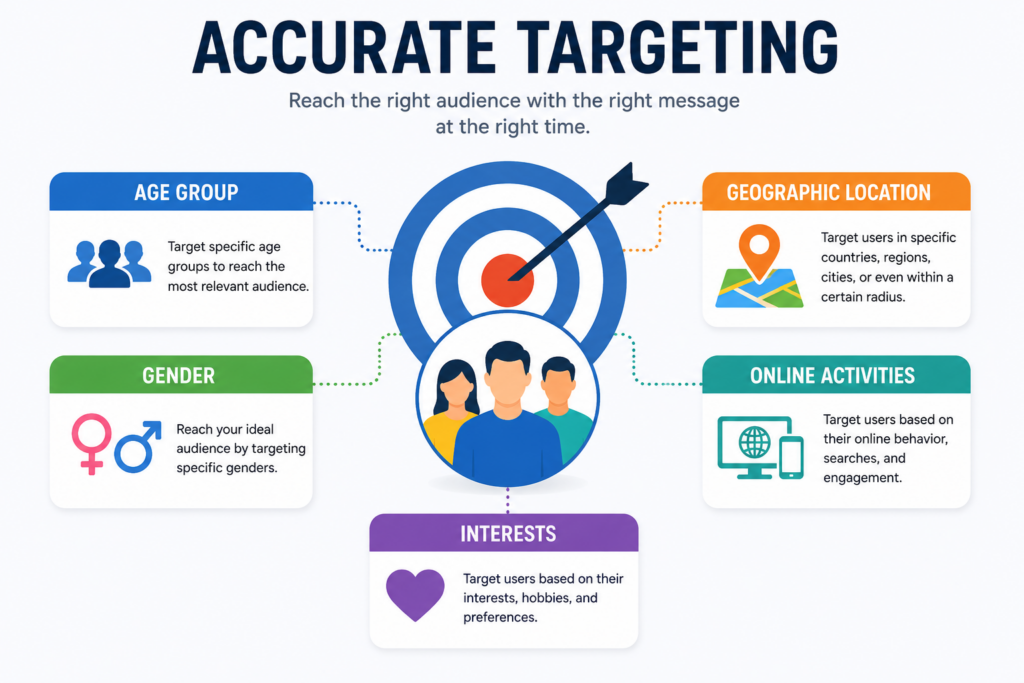
Businesses can reach specific audiences based on factors such as:
- Age group
- Gender
- Interests
- Geographic location
- Online activities
This improves the likelihood of reaching potential customers who are genuinely interested.
Real-Time Data and Insights
Digital marketing platforms provide detailed analytics that help businesses evaluate performance.
Metrics commonly tracked include:
- Website traffic
- Click-through rates
- Conversions
- User engagement
- Return on investment
These insights support better decision-making and campaign optimization.
Stronger Customer Connections
Digital channels make it easier for businesses to communicate directly with customers.
Regular interaction helps build trust, improve satisfaction, and encourage loyalty.
Worldwide Reach
Through online platforms, businesses can connect with audiences across cities, countries, and continents.
This creates opportunities for expansion beyond local markets.
Common Digital Marketing Tools
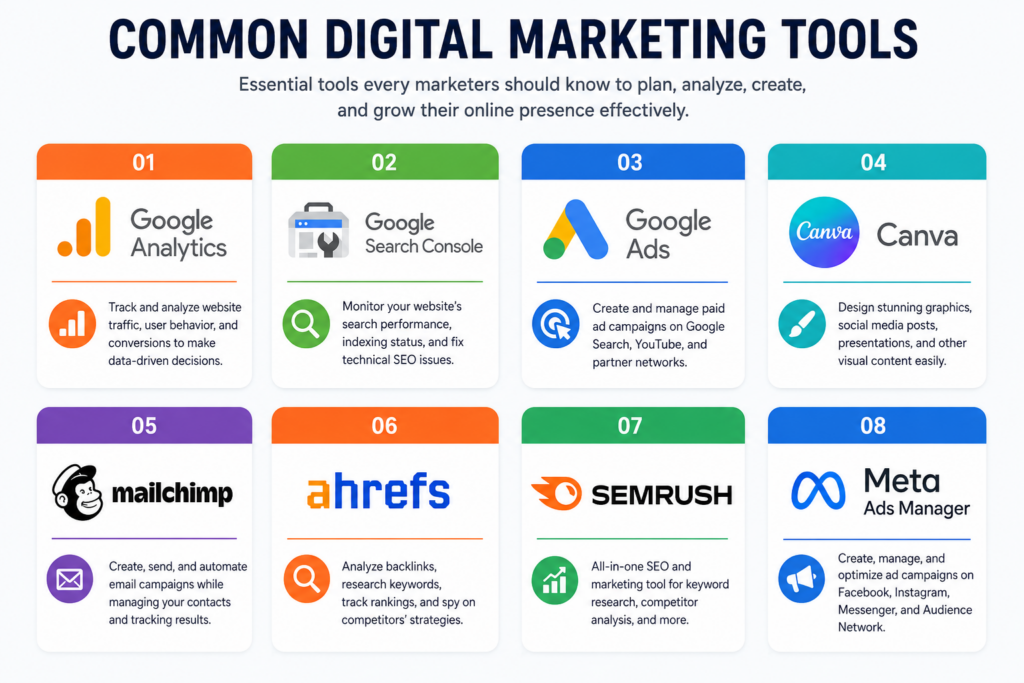
Digital marketers rely on various tools to manage campaigns and analyze results.
Widely used tools include:
- Google Analytics
- Google Search Console
- Google Ads
- Canva
- Mailchimp
- Ahrefs
- SEMrush
- Meta Ads Manager
These platforms assist with content creation, campaign management, performance tracking, and optimization.
Challenges of Digital Marketing
Although digital marketing offers many advantages, it also comes with certain challenges.
Some common obstacles include:
- Intense market competition
- Frequent algorithm updates
- Large volumes of online content
- Rapidly changing trends
- Managing multiple digital channels
To remain successful, marketers must continuously learn and adapt to industry developments.
How Beginners Can Start Learning Digital Marketing
If you are just starting, focus on building a strong foundation in the core concepts. This guide explains What is Digital Marketing in simple terms.
Helpful steps include:
- Learn the basics of marketing.
- Study SEO principles.
- Explore social media strategies.
- Practice creating content.
- Understand email marketing techniques.
- Learn about online advertising platforms.
- Create a personal website or blog.
- Review successful marketing case studies.
- Work on practical projects.
- Stay updated through courses, blogs, and industry news.
Beginners can learn more about website analytics through Google Analytics and improve website visibility using Google Search Console. Hands-on experience is one of the most effective ways to develop digital marketing expertise.
Conclusion
Digital marketing involves promoting products, services, and brands through internet-based channels such as websites, search engines, social media platforms, email, and online advertising. As consumers increasingly depend on digital platforms for information and purchasing decisions, digital marketing has become an essential business function.
By using strategies like SEO, content marketing, social media marketing, email campaigns, and paid advertising, businesses can attract targeted audiences, build meaningful relationships, and achieve sustainable growth. The ability to measure results, control budgets, and reach customers worldwide makes digital marketing a powerful tool for organizations of every size.
For beginners, learning digital marketing can lead to valuable career opportunities and practical business skills. Learning What is Digital Marketing can open new career opportunities. As technology continues to advance, digital marketing will remain a key driver of business growth and customer engagement in the years ahead.
Pingback: Digital Marketing vs Traditional Marketing: Key Differences -
Pingback: How Social Media Marketing Helps Grow Your Brand -