
Introduction
The Role of AI in Digital Marketing has become increasingly important as businesses seek smarter ways to connect with customers and improve marketing performance. Artificial Intelligence (AI) has emerged as one of the most influential technologies in the digital age, helping organizations automate tasks, analyze data, and deliver personalized experiences.
As online competition continues to grow, marketers need advanced tools to understand customer behavior and optimize campaigns. AI provides the ability to process large amounts of information quickly and identify patterns that support better decision-making. This allows businesses to improve efficiency while enhancing customer engagement.
In this article, we will explore the role of AI in digital marketing, its benefits, key applications, and how it is shaping the future of online marketing.
What Is AI in Digital Marketing?
Artificial Intelligence refers to computer systems that can perform tasks that typically require human intelligence. These tasks include learning from data, recognizing patterns, making predictions, and solving problems.
In digital marketing, AI helps businesses automate processes, analyze customer behavior, personalize content, and improve decision-making. AI-powered tools gather information from multiple sources and provide valuable insights that support effective marketing strategies.
Rather than replacing marketers, AI acts as a powerful assistant that improves productivity and supports better marketing outcomes. To better understand the foundations of online promotion, it is important to learn about digital marketing and its core strategies.
Understanding Customer Behavior
One of the most significant aspects of the role of AI in digital marketing is understanding customer behavior. Consumers interact with brands through websites, social media platforms, mobile applications, emails, and search engines.
AI can analyze these interactions to identify customer preferences, interests, and purchasing habits. These insights help businesses create targeted campaigns that resonate with their audiences.
For example, AI can determine which products customers prefer, which content they engage with most, and when they are most likely to make a purchase.
Personalized Customer Experiences
Personalization has become essential in modern marketing. Customers expect brands to provide recommendations and content that match their interests.
AI makes large-scale personalization possible by analyzing customer data and delivering customized experiences. It can recommend products, articles, services, and content based on previous interactions.
This personalized approach improves customer satisfaction, increases engagement, and often leads to higher conversion rates.
AI-Powered Content Creation
Content remains a key component of digital marketing. Businesses create blog posts, social media content, email campaigns, and website pages to attract and engage audiences.
AI tools can assist marketers by:
- Generating content ideas
- Suggesting headlines
- Improving grammar and readability
- Optimizing content for SEO
- Assisting with content planning
While human creativity remains important, AI helps marketers work more efficiently and maintain consistent content quality. Businesses can explore AI tools and best practices through resources provided by Open AI and other industry leaders.
Improving Search Engine Optimization (SEO)
Search Engine Optimization is crucial for online visibility. AI has significantly improved SEO by helping marketers identify keyword opportunities, analyze competitors, and optimize website content.
AI-powered SEO tools can:
- Analyze search trends
- Suggest keyword improvements
- Monitor rankings
- Identify technical SEO issues
- Improve content optimization
The role of AI in digital marketing continues to grow as search engines become more advanced and data-driven.
Smarter Email Marketing
Email marketing remains one of the most effective digital marketing channels.
AI improves email marketing by:
- Identifying the best sending times
- Personalizing email content
- Segmenting subscribers
- Predicting user engagement
- Optimizing subject lines
These capabilities help businesses increase open rates, click-through rates, and overall campaign performance.
Enhancing Social Media Marketing
Social media platforms generate enormous amounts of user data every day. AI is also helping businesses improve their social media marketing efforts through automation and audience analysis.
AI helps marketers:
- Analyze audience behavior
- Monitor brand mentions
- Identify trending topics
- Schedule content
- Measure campaign performance
By automating repetitive tasks, AI allows marketers to focus on strategy and creativity.
Chatbots and Customer Support
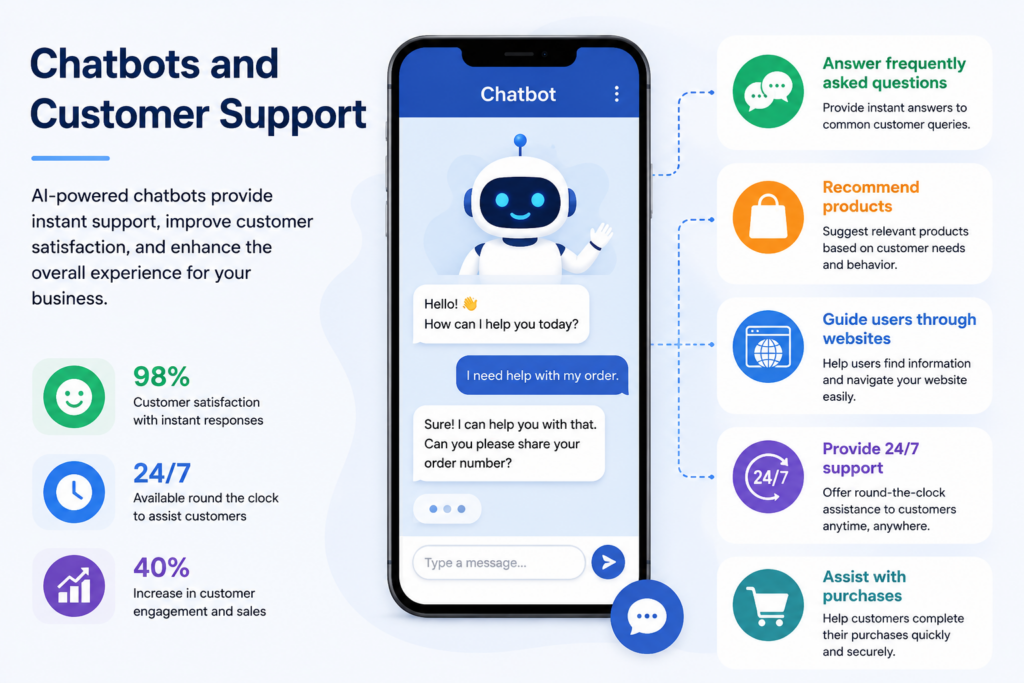
AI-powered chatbots have transformed customer service.
Chatbots can:
- Answer frequently asked questions
- Recommend products
- Guide users through websites
- Provide 24/7 support
- Assist with purchases
This improves customer satisfaction while reducing the workload for support teams.
Better Advertising Performance
Digital advertising requires constant optimization.
AI helps marketers:
- Identify ideal audience segments
- Optimize ad placements
- Improve bidding strategies
- Analyze campaign performance
- Maximize return on investment (ROI)
These capabilities help businesses achieve better advertising results while managing budgets more efficiently.
Predictive Analytics and Decision Making
Predictive analytics is one of the most powerful applications of AI.
By analyzing historical data, AI can forecast future trends and customer behavior. Businesses can use these predictions to:
- Anticipate customer needs
- Identify sales opportunities
- Forecast demand
- Improve campaign planning
Data-driven decisions often lead to stronger marketing outcomes and reduced risk.
The Future of AI in Digital Marketing
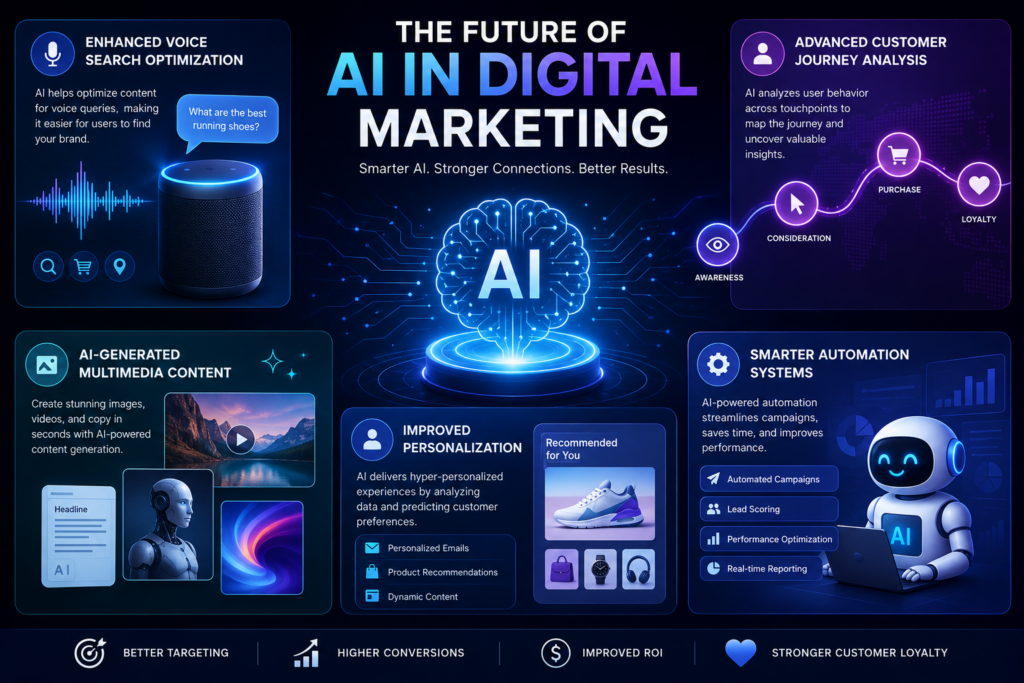
The future of AI in digital marketing looks promising. Advancements in machine learning, automation, and data analysis will continue to reshape marketing strategies.
Future developments may include:
- Enhanced voice search optimization
- Advanced customer journey analysis
- AI-generated multimedia content
- Improved personalization
- Smarter automation systems
Businesses that embrace AI early can gain a competitive advantage and deliver better customer experiences. Marketers can stay updated on AI developments by following industry resources such as Google’s AI initiatives.
Conclusion
The role of AI in digital marketing continues to expand as businesses seek smarter ways to engage customers and improve performance. AI helps marketers understand customer behavior, personalize experiences, automate repetitive tasks, optimize SEO, enhance advertising campaigns, and improve decision-making.
As technology evolves, AI will become even more important in shaping digital marketing strategies. Businesses that combine AI-powered tools with human creativity and strategic thinking can build stronger customer relationships and achieve sustainable growth.
The future of digital marketing is not about replacing humans with machines. Instead, it is about using AI as a powerful partner to create more efficient, personalized, and effective marketing experiences.